I spent years learning how to make decisions with data.
Math & Econ at UCSD. Financial models at PwC. I was trained to believe that if you had the right numbers, you had the right answer.
Then I moved to Lagos and started working on the ground.
I had never worked in operations before. The first time I worked on ground in one of our hospitals, I was overwhelmed. The pace, the sounds, the urgency of it all. I didn't know where to look or what to do with myself. I had spent a long time behind screens, but being on the ground felt completely different.
That was January 2025. Fourteen months later, sitting in a hospital is where I feel most at home.
One of the biggest lessons for me has been this: the ideas we discuss in the boardroom and the plans we build in Excel can look perfectly logical on paper. But when you get on the ground, you realize they are not always implemented the way you imagined, because reality is more complex, more human, and far less neat.
And this is why some of the most valuable insight comes from the patient. I remember when I initially joined Shridhar Sethuram's one constant advice was to obsessively observe the customer, that's where the real data lies.
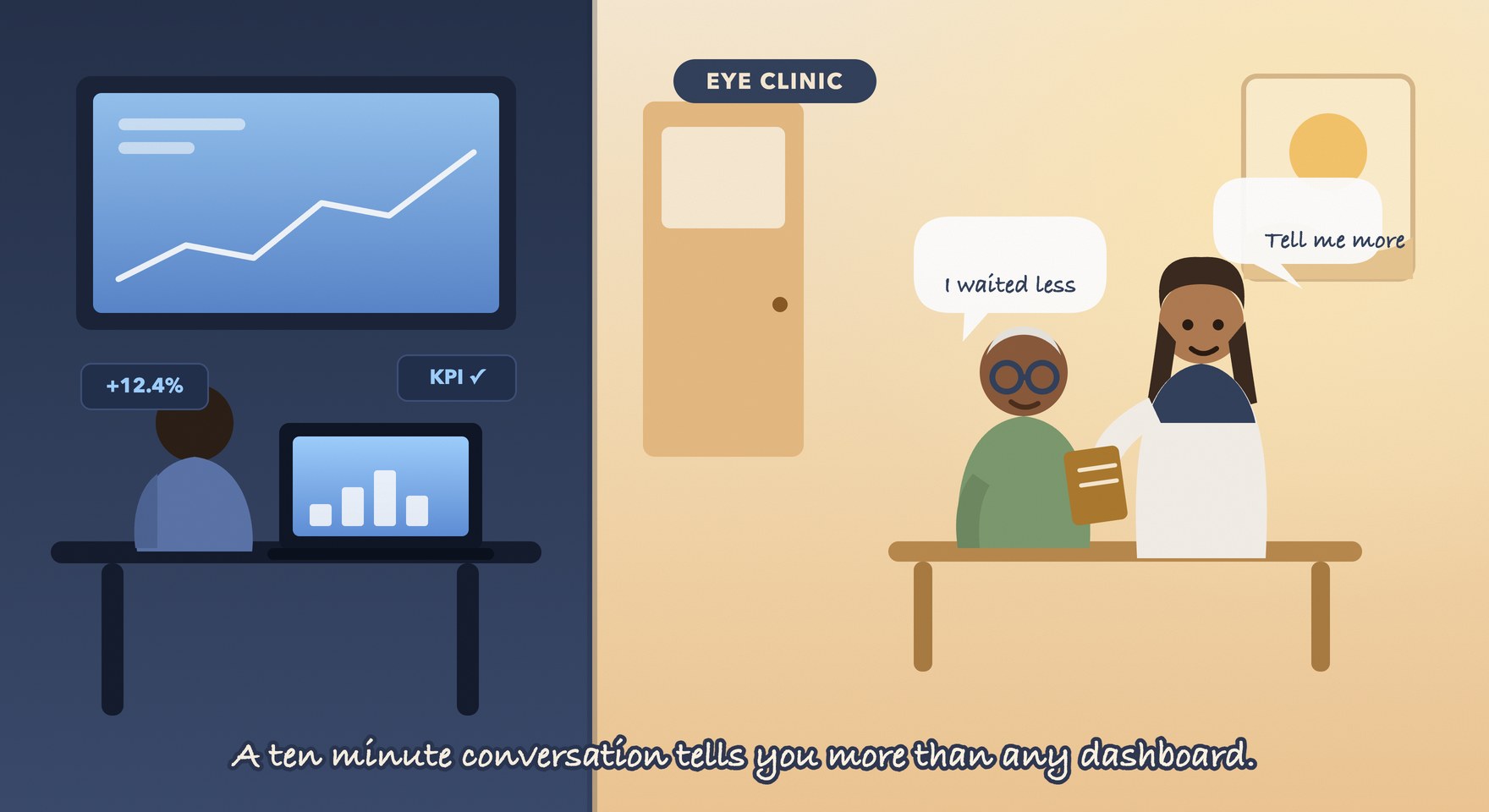
A ten minute conversation with someone who just walked out of a consultation will tell you more about how your center is actually running than any dashboard ever will. Where did they feel confused? Where did they wait too long? Did they feel heard? Did they feel cared for?
That is the real data.
I still like working with data and want to analyse the numbers. But I have stopped treating them as the answer, and treat them more like the starting point. The patient's experience is where the truth lives. There’s also a quiet sense of pride in talking to a patient and knowing you have actually played a small part in changing their life for the better and that’s what keeps me going! 😊